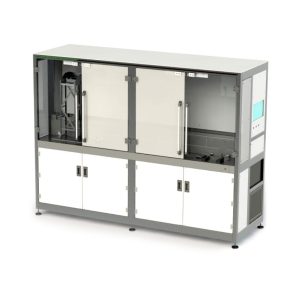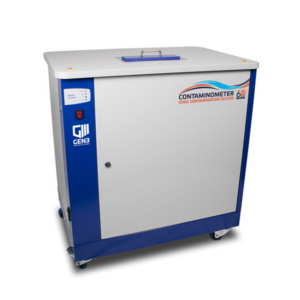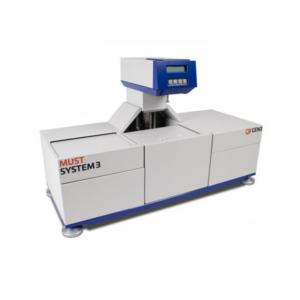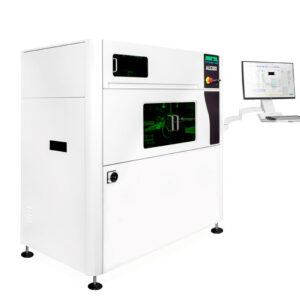
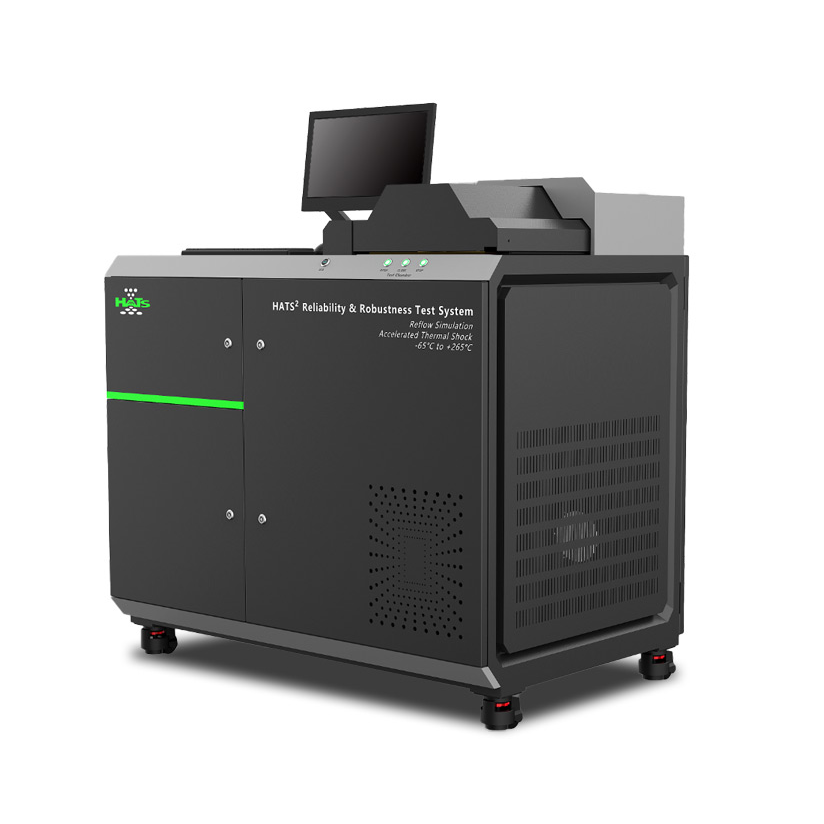
- Advanced HATS² (Highly Accelerated Thermal Shock) tester for simulating convection reflow assembly and evaluating PCB/substrate reliability, including plated through holes (PTHs)
- Wide operating temperature range of -65°C to +265°C
- Supports up to 1,000 thermal shock cycles per week
- Reduces cycle time by 60-80% compared to traditional thermal shock methods
- Temperature equalization in just 3-6 minutes, versus 30 minutes for dual chamber systems
- Uses high-speed air as the heat transfer mechanism for maximum possible transfer rate, closely replicating classic dual chamber technique
- Chamber capacity of 72 IPC-2221B “D” coupons or 36 single-via/custom coupons, supporting up to 252 total test nets per load
- Real-time, in-situ 4-wire resistance monitoring, capable of measuring resistances below 0.001 Ohm
- Detects barrel cracking and interconnection separation as they occur, with single-via testing offering greater sensitivity than daisy-chain methods
- Supports air-to-air thermal shock and convection reflow simulation, plus custom thermal/reflow profile creation and multiple consecutive reflow cycles
- Compliant with IPC-TM-650 Method 2.6.7.2C (air-to-air thermal shock) and Method 2.6.27B (convection reflow simulation)
- Ideal for high-reliability industries including aerospace, defence, medical devices, and electronics manufacturing
Technical Specifications
| Specification | Value |
|---|---|
| Temperature Range | -65°C to +265°C |
| Thermal Shock Cycles | Up to 1,000 per week |
| Cycle Time Reduction | 60–80% vs. traditional methods |
| Temperature Equalization | 3–6 minutes |
| Chamber Capacity (IPC-2221B “D”) | 72 coupons |
| Chamber Capacity (Single-Via/Custom) | 36 coupons |
| Max Test Nets per Coupon | Up to 7 |
| Max Test Nets per Chamber Load | Up to 252 |
| Resistance Measurement | Below 0.001 Ohm (4-wire system) |
| Dimensions (W x D x H) | 141cm x 90cm x 119cm (case lid H: 21cm) |
| Weight | 438 kg |
| Power Requirement | 235–240V AC, 50/60Hz, 50A |
| Compliance Standards | IPC-TM-650 Method 2.6.7.2C, IPC-TM-650 Method 2.6.27B |