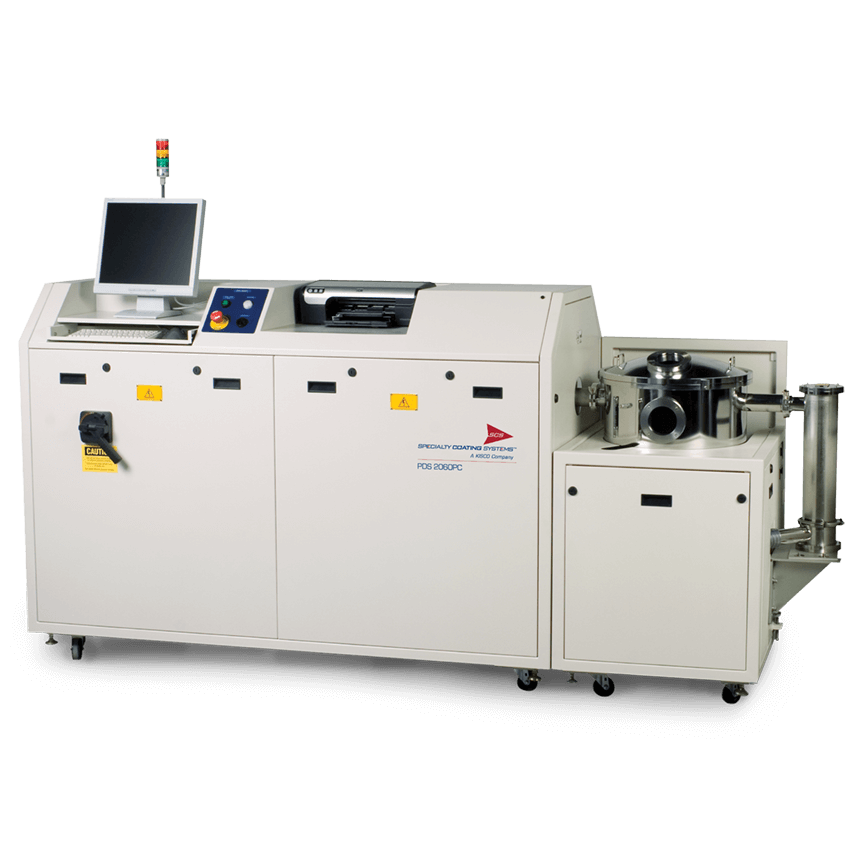
Parylene is one of the few conformal coatings that doesn’t require dipping or spraying. Instead, the system builds the coating as a vapour, molecule by molecule, inside a sealed chamber. A parylene deposition system controls each stage of this process to create a consistent, conformal coating.
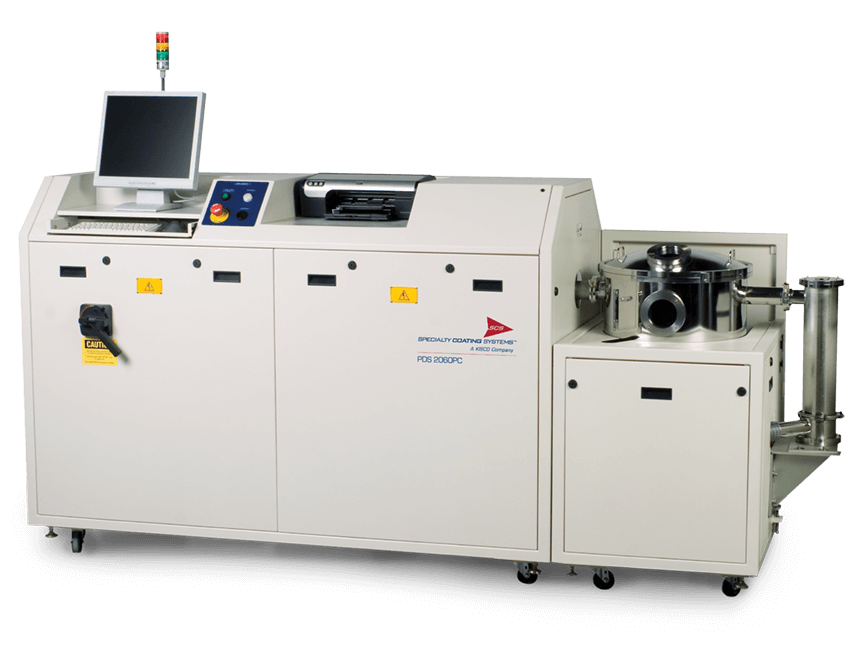
This article explains the basics of parylene deposition and uses the SCS PDS 2060PC, represented in Australia and New Zealand by ONBoard Solutions, as a working example.
What Is Parylene Conformal Coating?
Parylene forms a thin, uniform polymer film that follows the exact contours of a part. As a result, it can cover edges, crevices and other areas that liquid coatings may struggle to reach evenly. Unlike liquid coatings, parylene forms from a vapour, allowing it to cover exposed surfaces consistently without pooling or bridging.
For this reason, manufacturers commonly use parylene to protect electronics, medical devices, automotive components, and aerospace and defence hardware from moisture, dust and chemical exposure.
How the Coating Is Applied
A parylene deposition system carries out the coating process in three main stages:
Vaporisation. First, the system heats a solid dimer to around 150°C, which converts the material into a vapour.
Pyrolysis. Next, the vapour passes through a furnace at around 680°C. The heat splits the dimer into a reactive monomer.
Deposition. Finally, the monomer enters the coating chamber. It then combines on the part surface at room temperature to form a solid, conformal film.
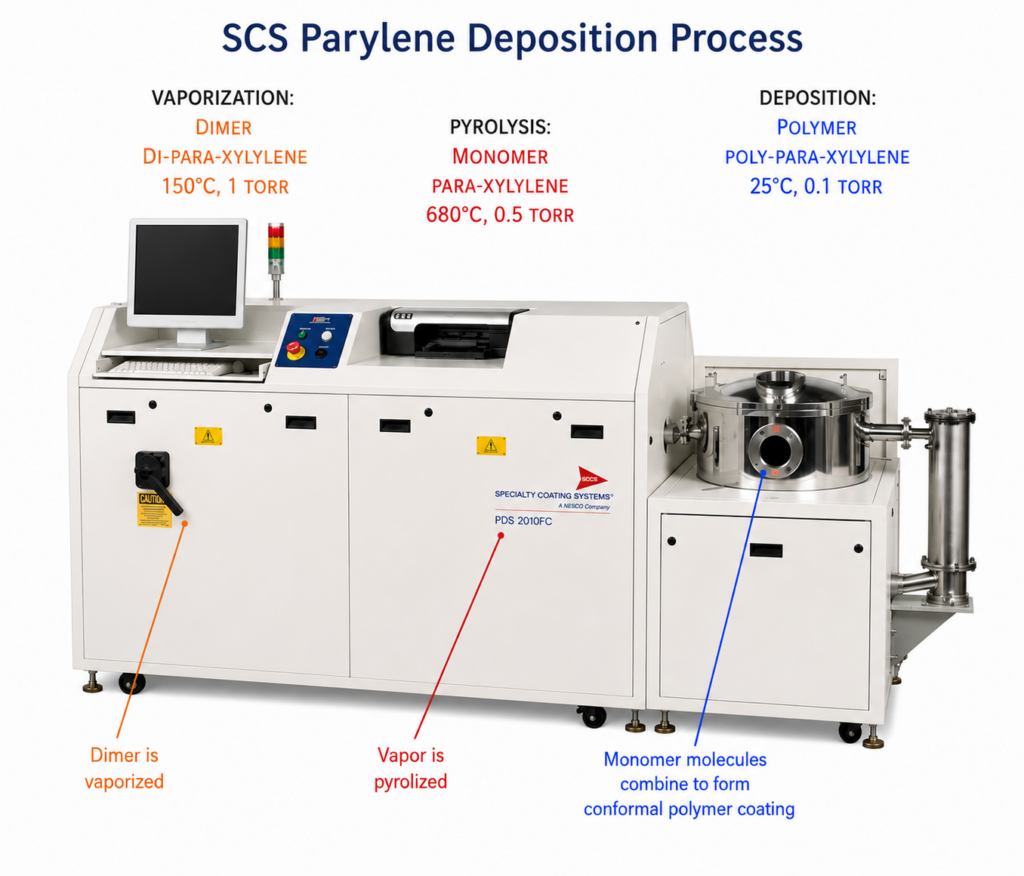
The balance of parameters throughout the entire system is critical for producing good polymer
Because the system performs deposition at room temperature, manufacturers can coat temperature-sensitive components that may not tolerate a curing oven or liquid coating process. In addition, operators can control coating thickness through dimer load and dwell time, providing fine control from around 500 angstroms up to 75 microns.
Full technical specifications for the unit are available from Specialty Coating Systems (SCS), the equipment manufacturer.
Where Parylene Deposition Systems Are Used
Parylene provides thin, uniform and pinhole-free coverage, making it well suited to applications where components must withstand environmental stress. For example, manufacturers use parylene in electronics manufacturing, medical devices, automotive electronics, and aerospace and defence applications.
SCS parylene systems also operate at facilities for manufacturers including Raytheon, Boeing, Honeywell and Northrop Grumman.
Key Takeaways
- A parylene deposition system applies coating through vapour deposition rather than dipping or spraying.
- Dimer load and dwell time control coating thickness, providing results from 500 angstroms to 75 microns.
- The SCS PDS 2060PC provides full PC control, automated monitoring and automatic data logging for traceability.
Considering parylene conformal coating for your production line? Talk to ONBoard Solutions about the SCS Systems available and find the right configuration for your application.