



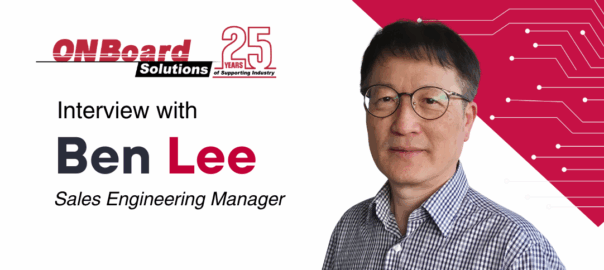
Ben Lee brings a strong, globally informed perspective to ONBoard Solutions, shaped by his experience with leading electronics and manufacturing organisations including Samsung and Thales. During his time with these industry leaders, he built deep expertise in manufacturing operations, advanced technologies, and international procurement.
Ben has also worked closely with Australian battery and hydrogen startups, gaining firsthand insight into the challenges of scaling emerging technologies into commercial production. This blend of global capability and local innovation underpins the approach he brings to ONBoard Solutions.
Ben, can you tell us about your professional background?
My career began in material science, which naturally led me into electronics manufacturing. I worked across Korea, the United States, and Australia, gaining experience in different parts of the global manufacturing ecosystem. In Korea, I worked with Samsung, which exposed me to large-scale production environments, advanced processes, and global procurement systems. I later worked in the United States as a Field Application Engineer and Technical Marketing Engineer for Samsung. In that role, I supported major electronic players such as Apple, Dell, Cisco, Broadcom, Nvidia, and AMD. I was also involved in developing medical and automotive applications.
After moving to Australia, I worked with Thales, which gave me experience in defence related electronics. I also worked with CAP-XX, where I gained deeper insight into the electronic components sector. Later, I worked with Australian startups in battery and hydrogen technologies. These roles gave me a firsthand understanding of the challenges that early stage companies face when trying to move from research into commercial scale production.
What are your views on the Australian manufacturing landscape?
Australia has a strong innovation culture, but the manufacturing volume is small. Many companies operate with twenty or thirty people. Processes are often semi automated. There is still a large gap between research and commercial scale manufacturing. That gap exists because Australia does not have the same experience base as regions like Korea, Japan, China, or the United States. Those regions reached their capability through long term high volume production. Even so, Australia has significant potential in areas such as renewable energy, battery development, hydrogen production, and fuel cell technology.

What attracted you to join OnBoard Solutions?
I had used OBS’ equipment in a previous role and always found the company reliable. When I moved back to Sydney, I noticed an opening for a Business Development Manager and it immediately caught my interest. OBS has a strong focus on manufacturing equipment and materials, which aligns well with my background. I also saw an opportunity to use my international experience to help OBS diversify its supplier base and explore new market segments.
Where do you see the key growth opportunities for OBS?
I see potential in batteries, hydrogen, advanced renewable manufacturing, and other emerging sectors. Many of companies need mid tier equipment that is high quality but more accessible than some of the large European and American systems. There are excellent suppliers in Korea, Japan, Taiwan, and Malaysia who fit this space. Expanding our network will give our customers more options. It will also help OBS support a wider range of applications. We also see defence supply chain as one of the important. It is a space where OBS have been operating for many years without seeing it’s important role in enabling Australian sovereign manufacturing capability. Without machines and material supplied to Tier 1 and Tier 2 defence suppliers, they wouldn’t be able to support our Australian defence programs.
How do you view Industry 4.0 and automation in Australia?
These technologies are important globally, but full automation only makes sense when manufacturing volumes are high. Most Australian manufacturers are not yet at the level where they need full automation. They rely on semi-automated processes. AI and Industry 4.0 will become more relevant as we scale. There are a few examples, such as the hydrogen company in Wollongong that recently secured one hundred million dollars in investment. Companies like that will need advanced systems, and OBS can support them.
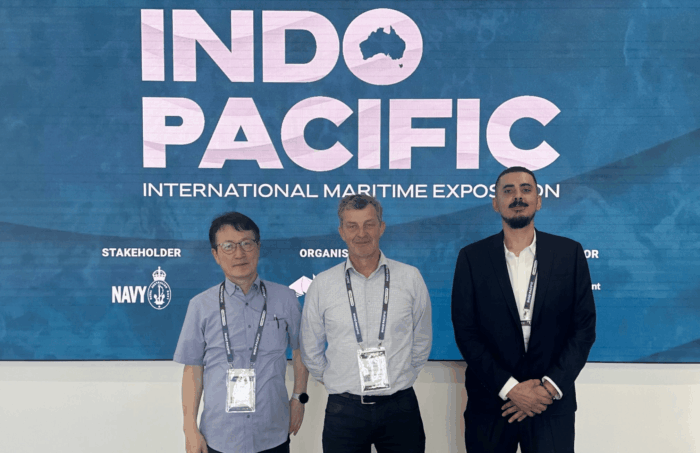
What motivates you, and what is your vision for your work at OBS?
I come from a very diverse international background. I want to use that experience to help Australian companies grow. My immediate focus is to expand our supplier network and introduce more diverse equipment options. My long-term interest is helping Australian companies bridge the gap between development and manufacturing. OBS plays an important role in connecting industry with the right tools. I would like to see that role grow.